


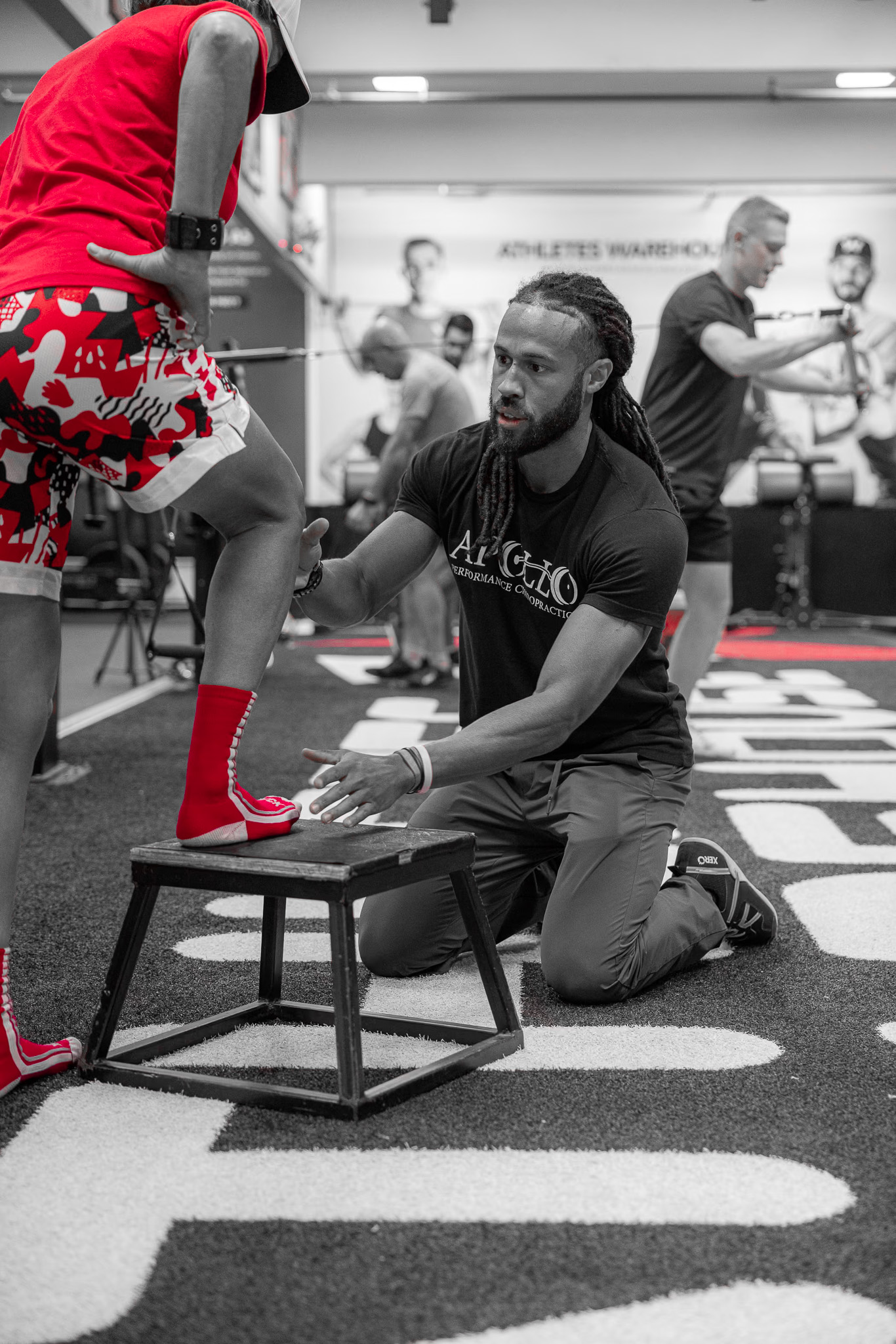
By Stephen Portee, MS, CSCS
Dealing with injuries or chronic pain is frustrating. It forces you out of the activities you love and can make even simple daily tasks feel uncertain. For active individuals, recovery from injury is especially challenging — but avoiding a few common mistakes can dramatically speed up the process.
Here are four mistakes we see repeatedly, and exactly what to do instead.
Resting completely when you are in pain might seem logical. But inactivity typically slows recovery rather than accelerating it. This is the same principle behind PEACE & LOVE, the framework that has largely replaced classic RICE-style rest-and-ice protocols in sports medicine — it calls for early, controlled loading rather than prolonged rest.[1] Movement is crucial for healing — it improves circulation, delivers nutrients to injured tissues, and prevents the deconditioning that accumulates quickly when you go sedentary.
Do this instead: Modify, do not eliminate.
Find pain-free alternatives that keep you moving without aggravating your injury. If your back bothers you during a deadlift, try a hip thrust or a machine that provides more stability. If your knee flares up running, try cycling or swimming. The goal is to maintain movement capacity while respecting the injury.
Pain is often a symptom of an underlying issue rather than the issue itself. Without addressing that underlying issue, the problem tends to persist or worsen — even if temporary relief comes and goes.
Do this instead: Seek a thorough evaluation.
A qualified professional can identify what is actually driving your pain. For example, knee pain can stem from weak glutes, tight hip flexors, poor ankle mobility, or a combination of factors. Getting a comprehensive evaluation gives you a real answer and a path forward — rather than chasing symptoms with temporary solutions.
Feeling better does not mean you are ready to jump back in at full intensity. This is one of the most common setbacks we see: someone feels good, skips ahead in their progression, and ends up further back than when they started.
Do this instead: Ease back gradually.
Start at a significantly reduced intensity. Replace a 60-minute run with a 15-minute jog. Return to the weight room at 50–60% of your previous loads. Test the waters before committing to full intensity.
If you are working with a professional, follow the return-to-activity plan they set. That progression exists for a reason — it is based on your specific injury, your tissue healing timeline, and your overall readiness to handle load.
Patience now prevents setbacks later. Listen to your body.
Good nutrition is not optional during recovery — it is essential. Processed foods and excess sugar promote inflammation and slow healing. Nutritional deficiencies impair the tissue repair process.
Do this instead:
Think of food as a companion to your healing. High-quality nutrition accelerates the process. Poor nutrition slows it down.
Recovery from long-term pain or injury takes time — but the timeline is not fixed. The choices you make during recovery have a direct impact on how quickly and completely you return to the activities you love.
Focus on improving movement and function first. Pain relief follows naturally from that foundation. And if you're already dealing with a setback, it's worth reframing what it can teach you — we go deeper on that in What Injuries Can Teach You.
Stephen Portee, MS, CSCS is the Managing Partner and lead strength and conditioning coach at Apollo Performance Chiropractic & Training in Pleasantville, NY.


