


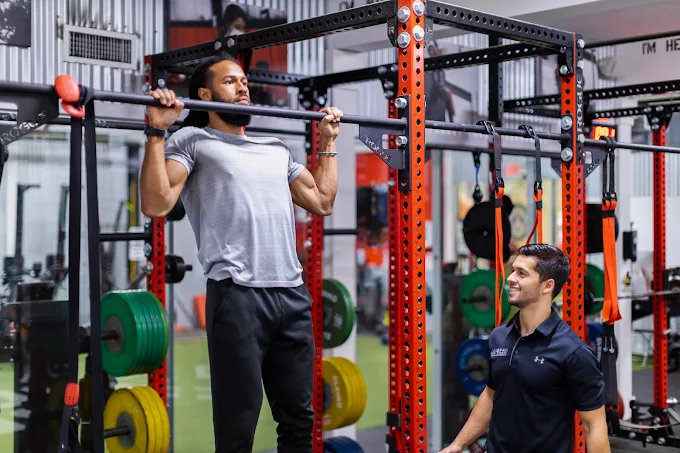
As an active adult who still plays sports or competes, you understand the desire to keep performing at a high level. But many people fall into the trap of focusing solely on heavy weight training — neglecting the crucial elements of speed and power production in the process.
In this post, we will explore why incorporating power and speed training into your routine is essential for maximizing both athletic performance and continued muscle growth, regardless of your age or current fitness level.
Heavy weight training is undoubtedly beneficial — but it is only part of the equation for optimal athletic performance.
Plyometrics and power expression exercises are often underutilized, yet they preferentially recruit and stress fast-twitch muscle fibers — engaging roughly 86% of type II fibers compared to just 27% of slow-twitch fibers (Macaluso et al., Journal of Athletic Training, 2012). These fibers are crucial for explosive movements in sports and can significantly enhance your overall athletic ability, regardless of age.
For active adults, the key is striking a balance between traditional strength training and power and speed work. Here are effective ways to incorporate these elements:
Plyometric exercises: Box jumps, depth jumps, and medicine ball throws develop explosive lower and upper body power. These movements teach your body to produce force rapidly — a quality that degrades without training.
Sprint training: Short-distance sprints and hill sprints develop acceleration and top-end speed while also building lower body strength. Even submaximal sprinting — running at 90–95% of your top speed — delivers meaningful benefits without the recovery demands of all-out efforts.
Change of direction work: Deceleration and force absorption are critical for injury prevention in team and court sports. Most athletes train forward movement but neglect lateral and multidirectional demands.
Power and speed exercises, when performed without proper technique and progressions, carry a higher injury risk than traditional lifting. Here is why working with a qualified coach makes a real difference:
1. Injury prevention. Proper form and technique are critical. A professional ensures you are moving correctly before adding intensity.
2. Customized programming. Every person has different needs based on their sport, fitness level, and physical history. A generic program is rarely optimal.
3. Progressive overload. Proper progression is what drives adaptation without overtraining. Knowing when and how to increase demands is a skill.
4. Technique refinement. Many power exercises require complex motor patterns. Hands-on coaching accelerates this learning curve.
5. Integration with existing training. A skilled coach can incorporate speed and power work into your current program without compromising your other training goals.
As an active adult still engaged in sports or high-level recreation, incorporating power and speed training can significantly enhance your athletic performance and contribute to muscle growth — at any age.
The key is approaching it with the right knowledge, the right progressions, and ideally, the right guidance. With a smart plan, you can continue to improve your athletic output and enjoy the activities you love for years to come.
Stephen Portee, MS, CSCS is the Managing Partner and lead strength and conditioning coach at Apollo Performance Chiropractic & Training in Pleasantville, NY.


