


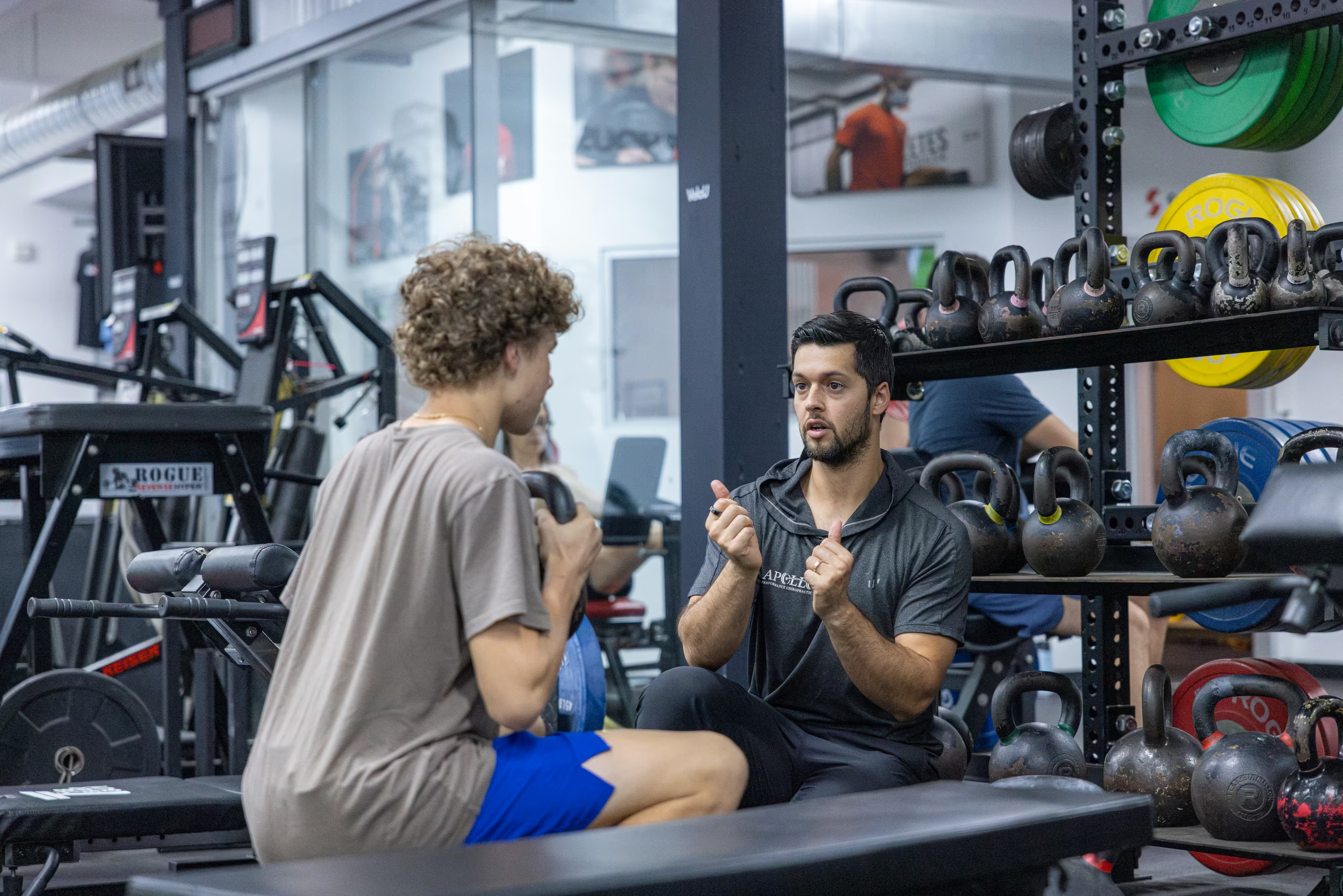
By Stephen Portee, MS, CSCS
Most golfers stretch. Almost none of them improve.
A few hip flexor holds before a round. Maybe a doorframe stretch at night. Months pass. The shoulders still won't turn. The hips are still locked up. That early extension is still costing strokes.
You're not being lazy. You're just doing the work in the wrong order.
On its own, stretching is like practicing your putting stroke without ever hitting a ball. The motion is there. But without the right prep before it and the right reinforcement after it, nothing actually changes.
The sequence that works is release, stretch, mobilize, strengthen.
Your nervous system needs a reason to cooperate first. Foam rolling and targeted pressure tell your brain it's safe to reduce tension in an area — that's the whole point. Tissue that trusts you will accept a stretch instead of bracing against it.
A 2021 study in Frontiers in Physiology backs this up more directly than you'd expect: after a bout of roller massage, ankle range of motion increased substantially in both the rolled leg and the leg that was never touched, with no measurable change in tissue stiffness. The researchers concluded the ROM gain came from a change in what the nervous system was willing to tolerate, not from anything mechanical happening to the muscle itself.[1]
For golfers, the areas that matter most are the lats, mid-back, glutes, hip flexors, and around the shoulder blade.
Opening up a range through stretching doesn't mean your body knows what to do with it. A golfer with better hip mobility from stretching alone will often still move poorly through the hips in the actual swing, because the nervous system never mapped that motion under real conditions.
Mobilizing — moving actively through the new range, not just holding it passively — is what builds the bridge between a range you have and a range you can use.
Strength is what makes the change stick. Any spot in the swing where the muscles can't support load becomes a spot for compensation, and compensation over time becomes injury.
This is also why golfers lose their offseason flexibility once they start playing again — the new range was never reinforced under load, so the swing reverts to whatever's strong. That's usually the old, restricted pattern.
A 2024 randomized controlled trial in BMC Sports Science, Medicine and Rehabilitation found that resistance training through a full range of motion produced flexibility gains statistically equal to a dedicated static stretching program over eight weeks, while also building strength that stretching alone didn't touch.[2] Stretching alone can open a range; it doesn't load it. That's worth being honest about — the study was small, 18 people split across three groups — but it lines up with what we see on the floor: a range you can't stabilize under load is a range you'll eventually lose.
Consistency matters just as much as the sequence itself. A 2022 meta-analysis in Sports Medicine found that mobility interventions lasting longer than four weeks produced meaningful range-of-motion gains, while programs of four weeks or less showed no significant improvement at all.[3] Ten minutes a day, kept up over weeks, beats an hour crammed in on a weekend.
In session, this isn't four separate workouts. It's one sequence, usually inside the same 60 minutes: release the tissue that's guarding the position, move into the stretch while it's still primed, then mobilize and load it before you leave, so your body isn't relearning the range from scratch next time.
That's the difference between mobility work that fades in a week and mobility work that actually holds up under a swing. It's the same foundation-before-speed approach we cover in What Actually Makes You Swing Faster — range and strength don't mean anything on the course until they're built into the pattern you actually use.
Most people are doing one or two of these four steps and wondering why the range doesn't stick. The golfers who actually change their swing are doing all four, in that order, every time.
Next time, we're taking this straight to the hips: what's actually limiting your rotation, how to work through it, and what it should look like in your swing.
Stephen Portee, MS, CSCS is the Managing Partner and lead strength and conditioning coach at Apollo Performance Chiropractic & Training in Pleasantville, NY.


