


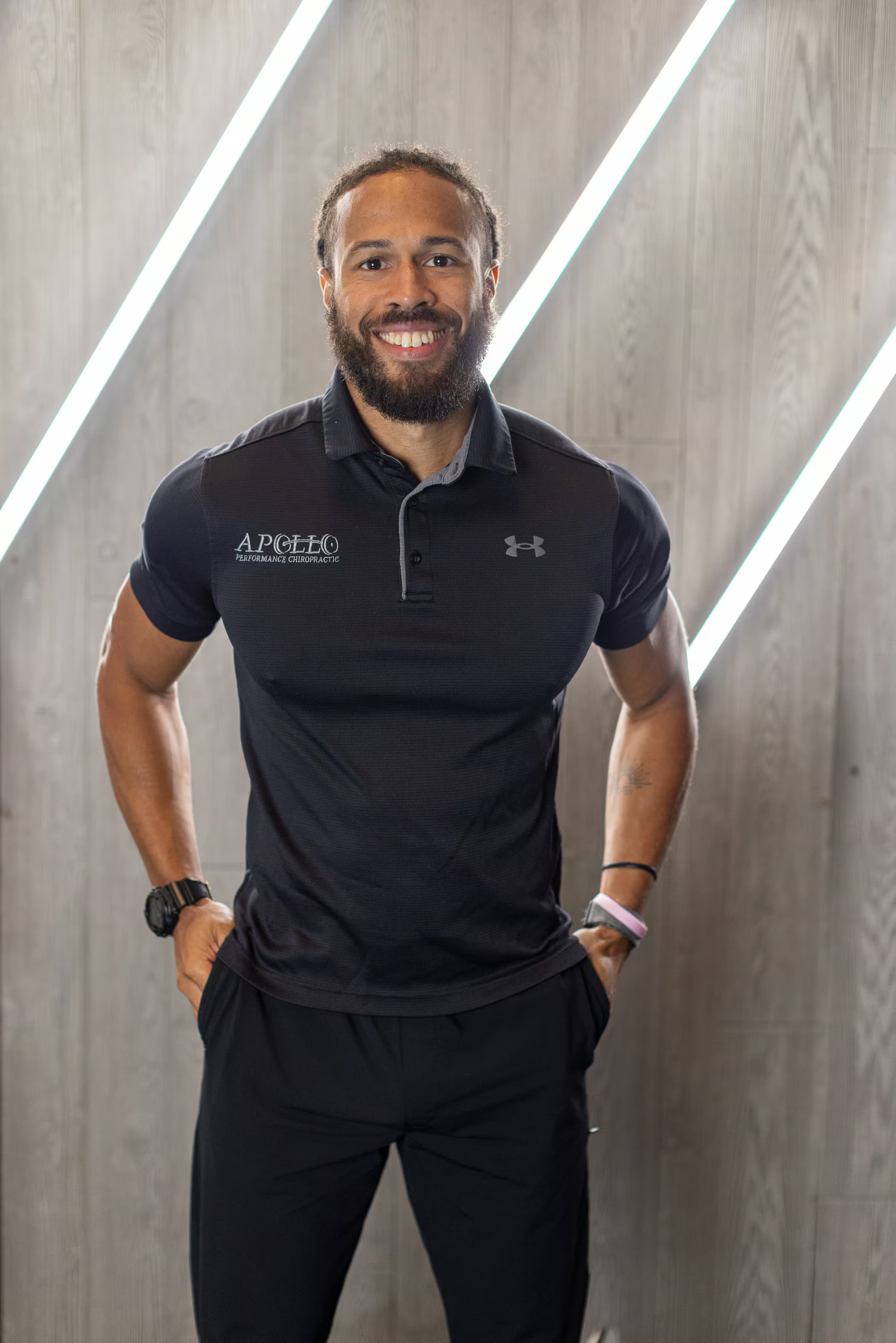
By Stephen Portee, MS, CSCS
Walk through most commercial gyms and you'll see plenty of benching, squatting, and deadlifting. What you almost certainly won't see is anyone training rotation, and if you do, they're probably an athlete following a sports performance program.
Here's the truth: rotation isn't just for athletes. Almost every movement you perform in daily life involves rotation. When you walk or run, your opposite arm and leg move together while your torso turns slightly. When you throw a ball, swing a golf club, play tennis, or even reach across the car seat to grab your bag, your body is rotating. So why does this movement pattern virtually disappear from most training programs?
Most gym exercises are designed around linear movement: pressing a bar up and down, pulling a weight toward your chest, squatting straight down and up. These are important movements. But they ignore how your body naturally functions.
Your core, hips, and shoulders are designed to work together in spirals and rotations, not just in one plane of motion. When rotation is ignored in training, two things typically happen:
Rotational training doesn't always look impressive. Medicine ball throws, cable chops, landmine rotations, and band-resisted anti-rotation exercises are harder to measure than a heavy bench press, and they don't photograph as well.
Because of this, most people deprioritize them. But ignoring rotation is training half of how your body actually moves.
You don't need a complete program redesign. Start with simple additions:
Start with light loads and focus on quality. The goal is to teach your body to produce and control rotational force, not just to move through the range.
Your body was built to rotate. Whether you're an athlete or simply want to move better and stay injury-free as you age, adding rotational training to your program makes your training more complete.
Next time you're designing a session, don't just think about up-and-down strength. Think about how your body moves in real life, and train accordingly.
Stephen Portee, MS, CSCS is the Managing Partner and lead strength and conditioning coach at Apollo Performance Chiropractic & Training in Pleasantville, NY.


