


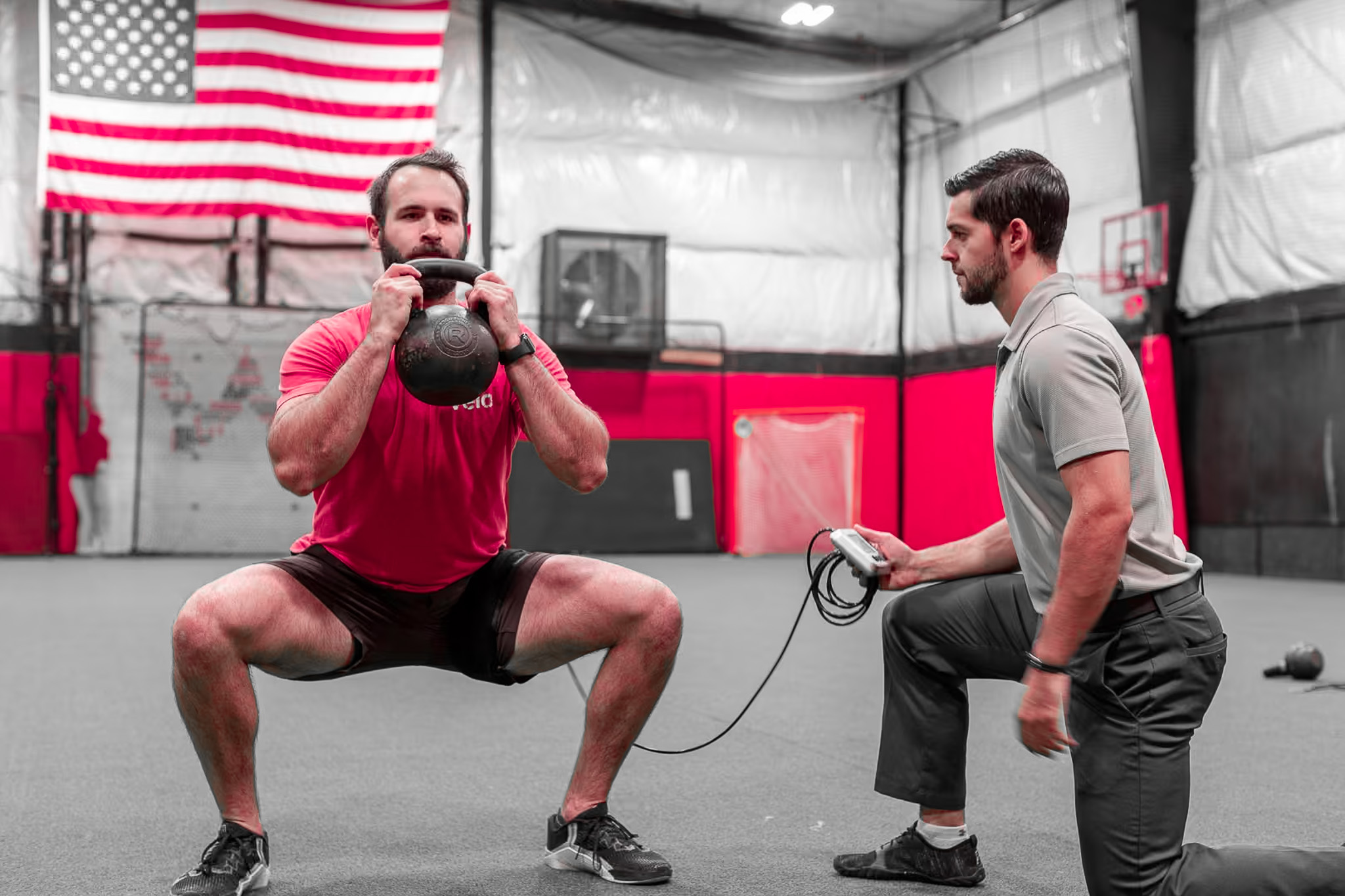
By Stephen Portee, MS, CSCS
High-Intensity Interval Training has become a staple in commercial gyms worldwide. It is marketed as the ultimate way to torch calories, get fit fast, and leave workouts feeling spent but accomplished.
But what if those very characteristics — the exhaustion, the high heart rate, the constant movement — are exactly what limit HIIT as a tool for building real strength and power?
HIIT primarily consists of short bursts of high-effort movement with minimal rest. This structure is excellent for elevating heart rate and improving cardiovascular fitness in a short period of time.[1] For general conditioning and fat loss, it serves a legitimate purpose.
But here is the problem: because the work rate is high and rest is minimal, this format is not built for developing true strength or power.
Strength is developed through progressive overload — lifting heavy loads with sufficient rest between sets to allow for maximal effort each time. Research on rest intervals shows that longer recovery periods between sets (roughly 3–5 minutes) produce greater gains in absolute strength than short-rest formats, largely because they allow higher training intensities and volumes to be sustained.[2]
In a HIIT session, the rapid transition from one exercise to the next with minimal rest does not allow for that kind of recovery. Instead, fatigue accumulates, reducing the ability to generate high levels of force. You are working hard, but not in a way that builds strength.
Power — the ability to exert maximal force in minimal time — requires explosive movements performed at near-maximal effort. Olympic lifts, plyometrics, and sprints are prime examples. That same rest-interval research shows higher levels of muscular power are produced across multiple sets with 3–5 minutes of rest compared to just 1 minute.[2]
HIIT, by its nature, places athletes in a fatigued state that makes it very difficult to produce high levels of force. When your system is already taxed from the previous interval, you're working hard — but not in the state your nervous system needs to be in to build true power.
To be clear: HIIT has a legitimate place in a well-rounded training program. It is an effective tool for:
If those are your goals, HIIT can be a strong fit.
If your goal is to get stronger, more explosive, or to improve athletic performance — the kind of speed and power work we break down in Speed and Power Training for Active Adults — structured strength training with proper programming is the path forward.
Strength gains come from progressive resistance training with appropriate intensity, load, and recovery time. Power is built through explosive movements performed when your neuromuscular system is fresh — not fatigued.
Instead of chasing the satisfying exhaustion that HIIT produces, focus on training methodologies that align directly with your performance goals. HIIT may leave you feeling like you worked hard. But feeling tired is not the same as getting better at the things that matter most to your performance.
Stephen Portee, MS, CSCS is the Managing Partner and lead strength and conditioning coach at Apollo Performance Chiropractic & Training in Pleasantville, NY.


