


By Catherine Poniros, Marketing Director
As people who believe deeply in the value of movement — for physical health, mental health, and quality of life — we pay attention when research points to a benefit we had not fully considered.
Here is one worth sharing: a 2025 study of more than 2,000 Chinese high school students found that when families created a supportive physical-activity environment, it measurably strengthened the parent-child relationship — and that stronger relationship, in turn, predicted more consistent exercise behavior and better mental health in the teenager.[1] About 41% of the total benefit to mental health ran through that relationship pathway, not through the exercise alone.
It makes intuitive sense once you see the data. Shared physical challenge creates connection. Sweating together strips away the awkwardness of face-to-face conversation. It puts both parent and child in a context where neither has all the answers, and effort is the shared currency.
For parents navigating the notoriously tricky terrain of adolescence, this is a low-barrier, high-reward approach to building connection.
You do not need a gym membership or a structured program. Consider:
The activity matters less than the consistency and the intention behind it. If you are also juggling a demanding job or a packed family schedule, the same principles we cover in Busy Schedule? How to Keep Working Out When Life Picks Up apply here too: a little planning goes a long way toward making shared workouts actually happen.
Movement is one of the most underutilized tools for mental health in both adults and adolescents. The research on exercise and teen relationships reinforces something we already know: fitness is not just about physical outcomes. It shapes how we feel, how we connect, and how we show up for the people around us — one of the reasons we consider exercise a foundational pillar, not an optional extra, in The 4 Pillars of Health Every Active Person Needs to Understand.
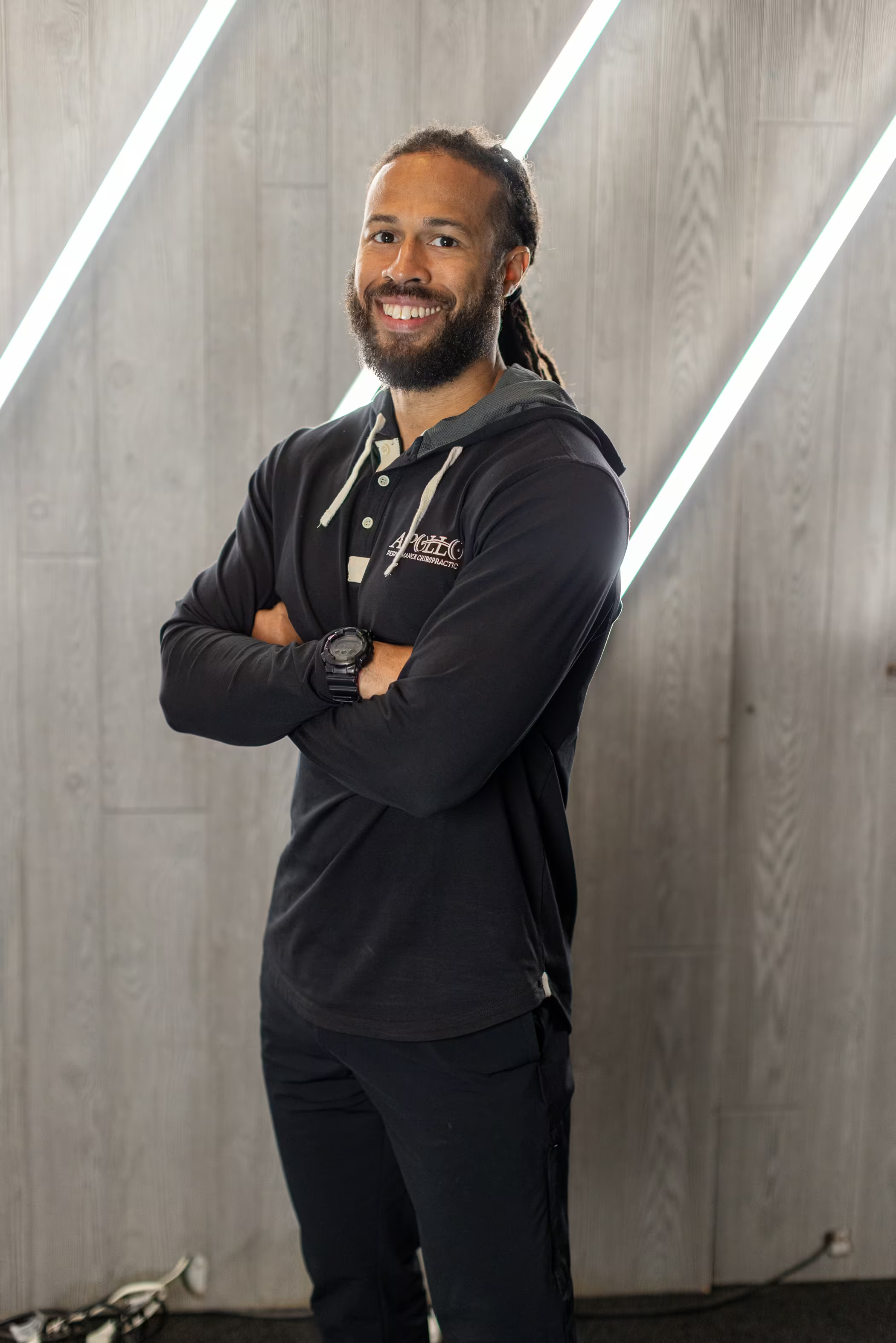
Catherine Poniros is the Marketing Director at Apollo Performance Chiropractic & Training in Pleasantville, NY.


