


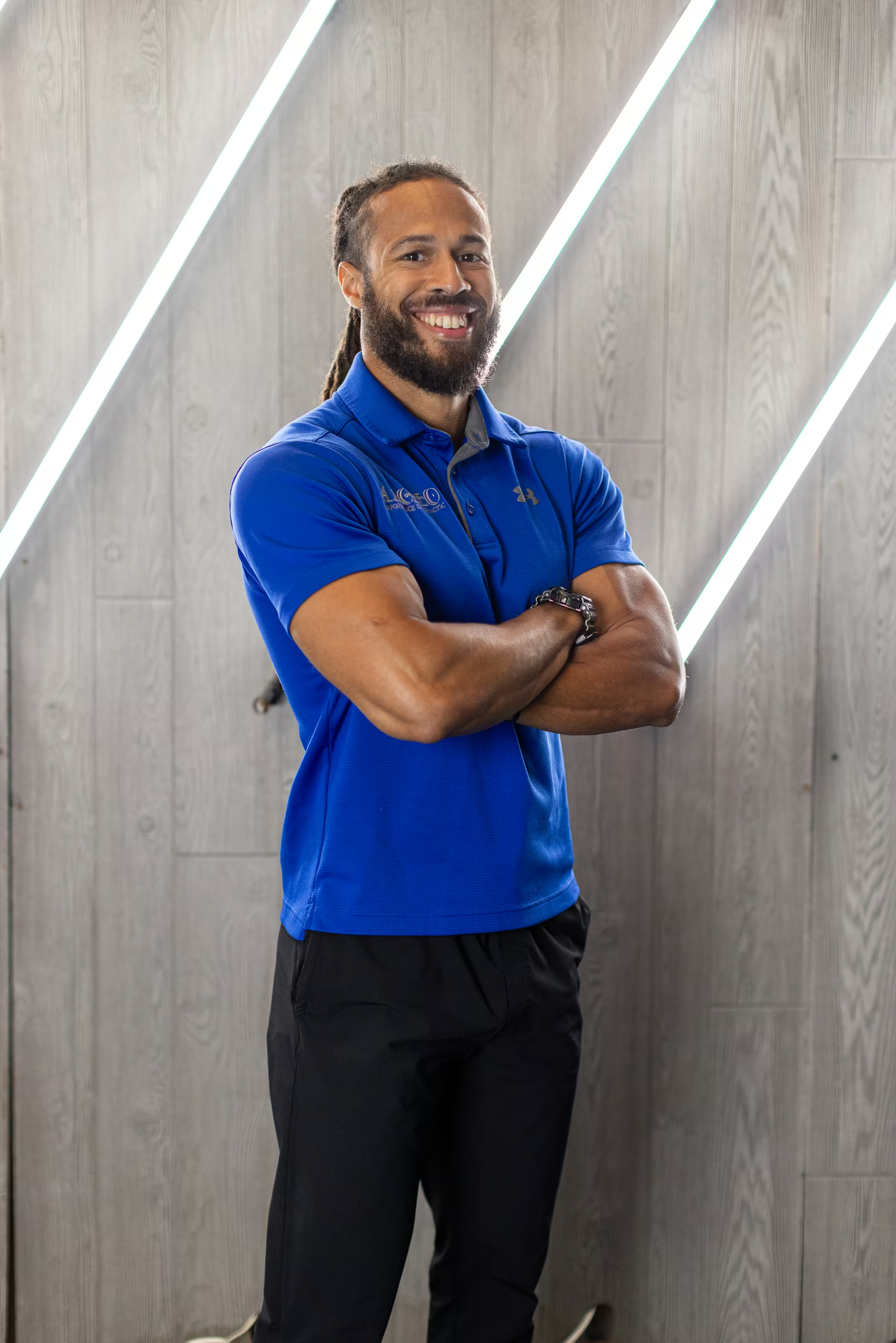
By Dr. Brett Poniros, DC, CSCS
Life is full right now for a lot of people.
Kids, growing businesses, injuries, family responsibilities — any one of those things could be a reason to let health and exercise slide. And if I am being honest, there are days when it would be far easier to push it aside and tell myself I will "get back to it" later.
But what I have learned — both personally and through working with hundreds of clients — is that if you want health to stick, it cannot live in the "when I have time" category.
It has to become part of who you are. It has to be identity-level.
For me, exercise is more than something I enjoy. It is a tool that helps me show up better in every role I play: father, husband, business owner, and coach.
On the days I get my workout in, I am more patient, more present, and more focused. I want my kids to grow up knowing that being healthy and active is not something you squeeze in when life allows. It is simply part of how you live.
That is what we mean by identity-level health. It is not a routine you maintain when things are easy. It is a value you return to when things get hard — precisely because things are hard. It's the same reason we treat exercise as one of the non-negotiable pillars in The 4 Pillars of Health Every Active Person Needs to Understand, not a nice-to-have that gets cut first.
Nobody does this alone. My wife and I both understand that by prioritizing our own health, we are not taking away from the family — we are investing in it.
That mutual respect is what allows us to encourage each other to take time for training even during demanding seasons. Sometimes one of us works out while the other handles the kids. Other times we make it a family activity — hikes, walks, bringing our daughter along to see that exercise is part of normal daily life. If you have older kids, there is research suggesting shared activity does more than keep everyone moving: it can strengthen the parent-child relationship itself, which we cover in Want a Better Relationship With Your Teenager? Try Exercising Together.
Find your version of this. A training partner, a coach, a spouse, a friend. The people around you have a significant impact on whether healthy habits stick.
This is the same mindset shift we try to foster with everyone who comes through Apollo.
Many people come to us because pain is getting in the way. Others are stuck in a cycle of being too busy, too tired, or too overwhelmed to prioritize their health consistently — the exact pattern we help people break in Busy Schedule? How to Keep Working Out When Life Picks Up.
No matter the reason, the approach is the same: start small and build consistency.
When you become someone who does not miss their two weekly workouts, adding a third becomes natural. When you start seeing yourself as someone who values movement, you do not have to convince yourself to keep going. It is simply what you do.
Everyone goes through seasons that are unpredictable and demanding. Those same things that make it hard to prioritize your health are also the exact reasons to lean into it.
There will always be reasons to wait until things settle down. But the truth is, life rarely pauses to give you a wide-open schedule and abundant energy.
What you can do is build small, realistic habits that align with the person you want to become — and let those habits compound over time.
That is the encouragement we hope to leave every client with: do not think of health as something to squeeze in around everything else. Make it part of your identity. And lean on the people around you to help hold that standard when life gets loud.
Dr. Brett Poniros, DC, CSCS is the founder of Apollo Performance Chiropractic & Training in Pleasantville, NY.


